
Real-time cryptocurrency address monitoring that alerts you to fund movement and enables rapid recovery response
Wallet tracking is a real-time monitoring system that alerts you immediately when any transaction occurs on specified cryptocurrency addresses. This surveillance creates a constant watch over stolen funds, ensuring you never miss the critical moment when assets move from untouchable cold storage to a location where they can be frozen and recovered.
Unlike manual blockchain checking, automated tracking operates continuously without human intervention. The moment tracked addresses show any activity — deposits, withdrawals, or even small test transactions — you receive instant notifications that enable rapid response before windows of opportunity close.
Cryptocurrency in private wallets cannot be frozen or seized regardless of evidence quality. Once stolen funds reach a cold wallet controlled entirely by the attacker, they sit beyond reach of any legal intervention. The funds remain visible on the blockchain but completely inaccessible for recovery through official channels.
This creates a waiting game. Criminals eventually need to monetize their theft, which requires moving funds to exchanges, payment processors, or other services with KYC requirements. Tracking ensures you detect this movement the instant it happens, creating opportunities for freeze requests before funds complete withdrawal. Most successful recoveries occur at this exact transition point.
Transaction detection: The system monitors all blockchain activity for tracked addresses across multiple networks. When funds transfer from one wallet to another, you receive immediate alerts with complete transaction details including amounts, destination addresses, and timestamps. This enables quick assessment of whether the new location offers recovery opportunities.
Automated address expansion: Sophisticated attackers don't send funds directly from the theft address to an exchange. They layer transactions through multiple intermediary wallets to obscure the trail. Quality tracking systems automatically identify and monitor new addresses that receive funds from tracked wallets, creating a surveillance net that follows funds through laundering attempts. Understanding how address flagging complements tracking strengthens your defensive position.
Service identification: When funds land at a known exchange, payment processor, or other identified service, tracking systems flag this specifically. These moments are critical — exchanges can freeze deposits before they're withdrawn, but only if you act within hours of deposit. The system highlights these high-priority alerts so you can respond immediately with freeze requests.
Begin tracking immediately after discovering theft. Every hour of delay increases the risk that funds will move before monitoring is active. Submit the primary theft address and any connected wallets identified through initial blockchain analysis to establish baseline surveillance.
Configure notification preferences based on urgency. For active investigations where rapid response is critical, enable push notifications to mobile devices for instant alerts. For older thefts where funds have remained static for weeks, email summaries may suffice. The key is ensuring notifications reach you quickly enough to enable action during narrow intervention windows.
Regularly review tracked addresses and expand coverage as analysis reveals new connections. Criminals often move funds in stages, with long delays between transfers. Continuous monitoring ensures you catch movement regardless of when it occurs — days, weeks, or even months after the initial theft.
Wallet tracking rarely recovers funds by itself. Instead, it provides the early warning system that makes other recovery methods effective. When tracking alerts you to funds hitting an exchange, you immediately submit freeze requests while assets are still accessible. When funds move to a new unknown address, you expand flagging to cover the new wallet and maintain surveillance.
The tracking data also feeds into analytical reports, providing investigators with precise timelines of fund movement and identification of services used by attackers. This intelligence helps law enforcement focus on the platforms most likely to yield KYC information about suspects. Review our guide on incident analysis reports to see how tracking data enhances investigation quality.
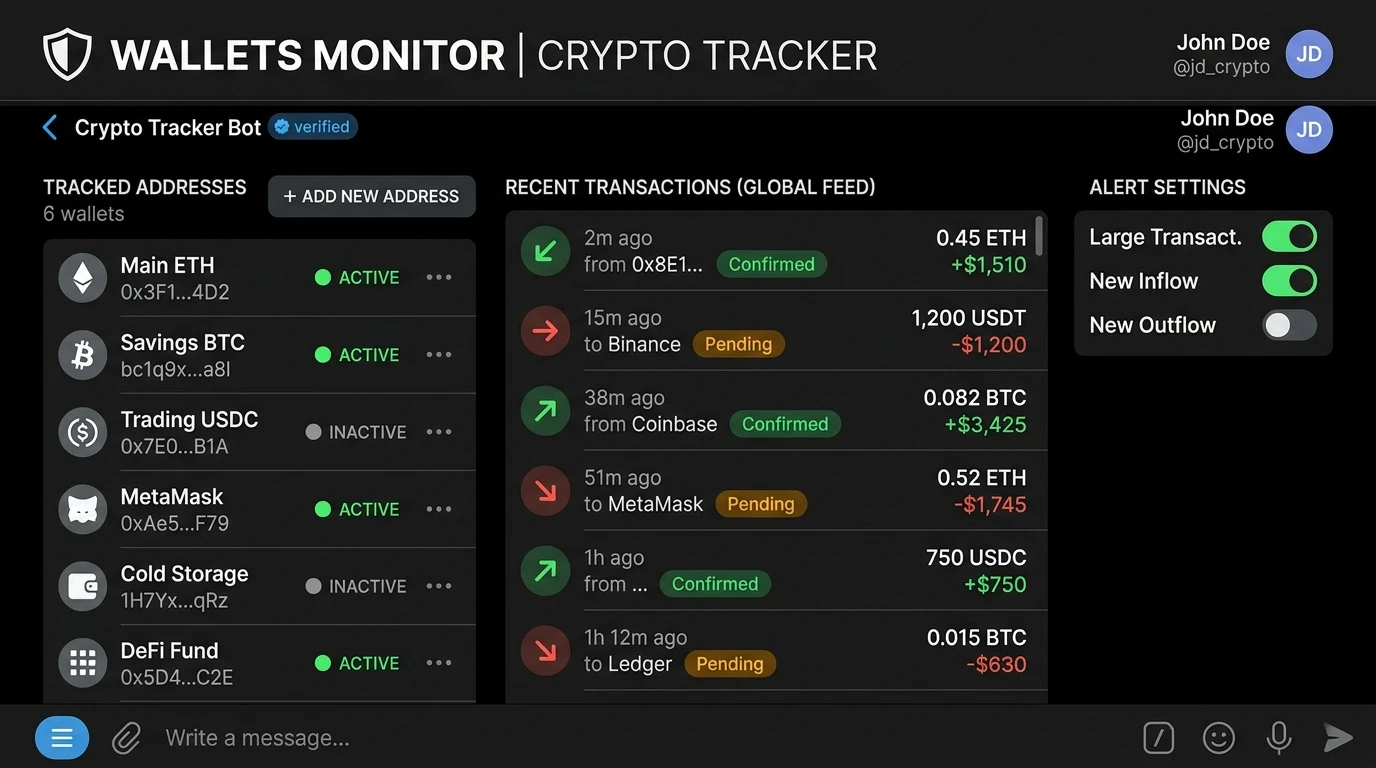
Tracking cannot prevent theft or guarantee recovery. It simply ensures you know when funds move and where they go. If attackers use privacy-focused cryptocurrencies, atomic swaps, or peer-to-peer exchanges that don't require KYC, tracking may reveal movement but provide no recovery opportunity.
Response speed determines outcomes. Tracking gives you information, but you must act on it immediately. Exchanges typically process withdrawals within hours of deposit. If you delay freeze requests by even a few hours, funds may already be gone. Success requires combining tracking alerts with pre-prepared response procedures so you can act within minutes of notification.
For complex cases involving substantial amounts, professional monitoring services offer advantages over self-service tools. We maintain 24/7 watch over tracked addresses with dedicated teams ready to submit freeze requests immediately when funds hit exchanges. This eliminates the risk of missing alerts during sleep hours or vacation periods when self-monitoring might fail.