
Comprehensive blockchain investigation that transforms stolen fund tracking into actionable evidence for law enforcement
An incident analysis report is a comprehensive blockchain investigation document that maps the complete journey of stolen funds from the moment of theft to their current location. This report transforms raw blockchain data into actionable evidence that law enforcement can use immediately, compressing investigation timelines from months to days and dramatically increasing recovery probability.
Professional reports provide everything investigators need: transaction flow visualization, address identification with risk profiles, laundering technique analysis, and specific recommendations for asset freezing and suspect tracking. Without this documentation, police departments struggle with blockchain complexity and cases stall indefinitely.
Our blockchain specialists conduct deep chain analysis to trace every movement of stolen assets. The investigation identifies the initial theft transaction and all subsequent transfers, maps connections between addresses to reveal clustering patterns, tracks funds through mixers, DEXs, and cross-chain bridges, and pinpoints where assets currently reside and whether they're accessible for freezing.
The final report delivers visual transaction flow diagrams that show the complete path from theft to current location, detailed address analysis identifying all wallets involved with risk scoring, technical documentation of laundering methods used by the attacker, and actionable freeze points where law enforcement can intervene effectively. This eliminates the guesswork that typically paralyzes crypto theft investigations.
Investigation acceleration: Law enforcement officers rarely have blockchain analysis expertise. Without a professional report, they must either learn blockchain investigation from scratch or wait for specialized units to become available. Both scenarios add weeks or months to the timeline. Our reports provide ready-to-use evidence packages that investigators can act on immediately, often within hours of receiving the documentation.
Enhanced freeze effectiveness: The report identifies specific intervention points where stolen funds touch regulated services. When funds hit an exchange, payment processor, or any KYC-compliant platform, there's a narrow window to request a freeze. Our analysis pinpoints these moments and provides the evidence exchanges need to justify freezing accounts before attackers withdraw. Learn more about how exchange freeze requests work in the recovery process.
Suspect identification support: While blockchain addresses are pseudonymous, transaction patterns often reveal identifying information. Our analysis highlights addresses with known KYC associations, unusual transaction patterns that suggest specific laundering services, and behavioral markers that help narrow suspect profiles. This intelligence helps law enforcement focus investigative resources where they're most likely to identify perpetrators.
Not every theft requires a full investigative report. For small thefts where funds moved directly to a mixer or privacy coin with no freeze opportunities, comprehensive analysis may not justify the cost. However, reports become essential when stolen amounts exceed $10,000, funds touched any centralized exchange or regulated service, the attack involved multiple addresses or complex laundering, or you need documentation for insurance claims or legal proceedings.
Timing matters significantly. Order reports immediately after theft while the trail is fresh. Attackers often move funds quickly through multiple hops in the first 48 hours, then let them sit. Early analysis catches patterns before they become obscured by weeks of additional transactions. Understanding the complete theft response process helps you determine when reports fit into your recovery strategy.
Low-quality reports simply list transactions without analysis or context. They provide blockchain explorers anyone could access but offer no investigative value. Professional reports interpret the data, identifying what matters and why. They highlight the specific evidence law enforcement needs, explain technical concepts in accessible language, and provide clear recommendations for action.
Quality indicators include transaction graph visualization showing fund flow patterns, risk scoring for all identified addresses, identification of known services (exchanges, mixers, bridges), timestamps and amounts for every relevant transaction, and specific freeze recommendations with supporting documentation. Reports meeting these standards succeed in court proceedings and insurance claims where simple transaction lists fail.
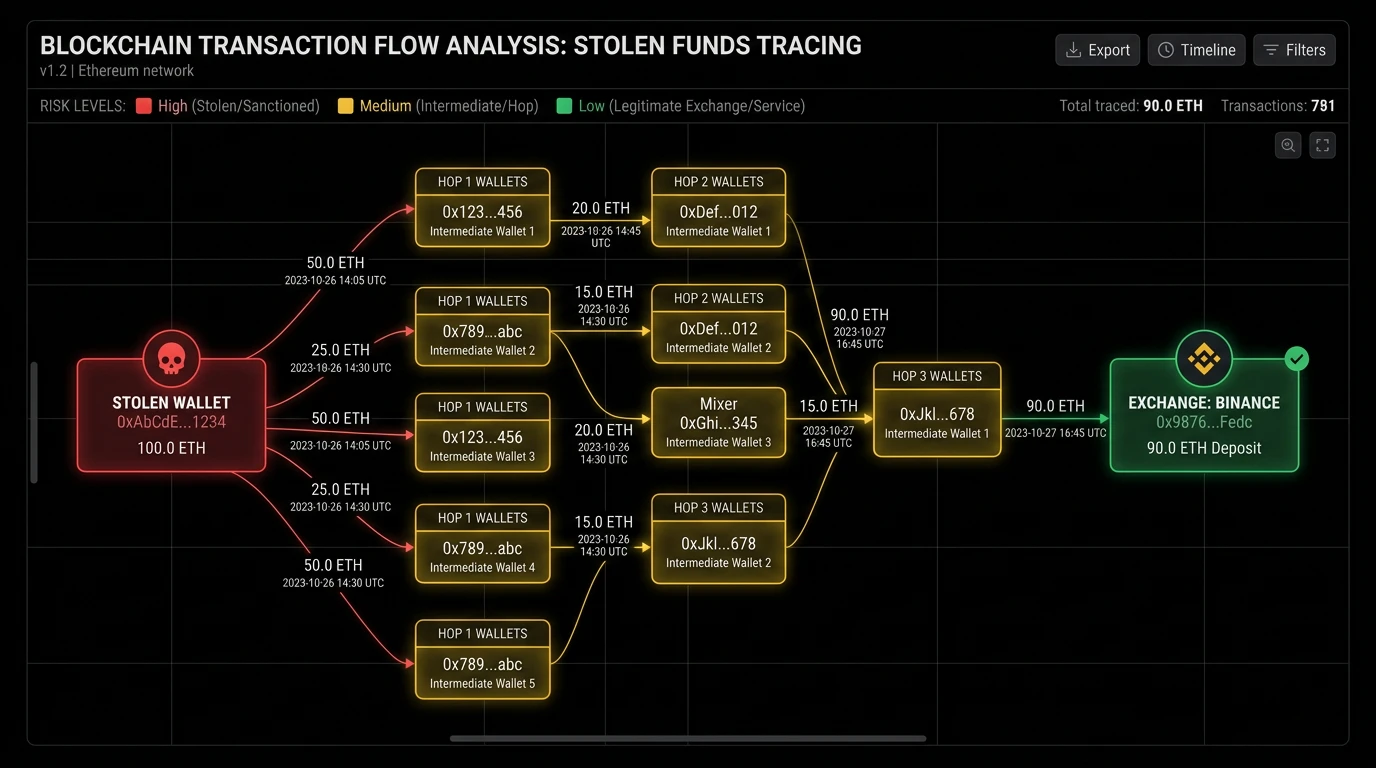
We deliver reports in formats optimized for different audiences. Law enforcement receives PDF documentation with embedded transaction evidence and legal terminology. Exchange compliance teams get technical packages with specific freeze requests and supporting blockchain proofs. Insurance companies receive claim-formatted documentation that satisfies their evidence requirements.
Report preparation typically takes 24-48 hours for straightforward cases and 3-5 days for complex multi-chain investigations. Rush analysis is available for urgent situations where immediate action could prevent fund withdrawal. The investment in professional analysis often returns multiples of its cost through successful recovery that wouldn't happen without proper documentation.